Human Rights
1. Policy and Basic Approach
1-1. Human Rights Policy
As a general trading company developing business around the world, Sojitz Group is involved in a wide range of supply chains. One of Sojitz Group’s most important tasks is to work together with suppliers to reduce environmental and societal (human rights) risks within its supply chains.
Sojitz has established the following Sojitz Group Human Rights Policy in order to further ensure that all Group business is conducted in alignment with Sojitz’s Key Sustainability Issue (Materiality) of "Respect for human rights of people involved in our businesses."
The Sojitz Group Human Rights Policy has been approved by the Sojitz Management Committee. Initiatives and policies created in accordance with the Human Rights Policy are reviewed by the Sustainability Committee and Management Committee, and the outcomes of these discussions are reported to the Board of Directors.
Sojitz Group Human Rights Policy
1. Our Commitment to Respect Human Rights
Sojitz Group strives to create value and prosperity by connecting the world with a spirit of integrity. We believe that respect for human rights is an integral foundation for creating Sojitz’s two types of value—"value for Sojitz” and “value for society”—and for meeting the expectations of our stakeholders.
As a general trading company, Sojitz Group buys, sells, and trades goods from all over the world, provides manufacturing and sales services for a wide range of products, plans and coordinates various projects, invests in a multitude of business fields, and conducts financial activities. In undertaking these business activities, Sojitz recognizes its responsibility to not cause or contribute to adverse impacts on human rights and work to prevent or mitigate any adverse impacts directly linked to company operations in order to fulfill its obligation to uphold human rights.
2. Scope of Policy
This policy applies to all executives and employees of Sojitz Corporation and Sojitz Group companies. Sojitz also requires executives and employees of its equity-method affiliates to implement human rights-related initiatives in line with the policy.
In addition, Sojitz Group expects the full understanding and support of its suppliers, business partners, and other associated parties regarding this policy.
3. Honoring International Human Rights Standards
We are committed to respecting human rights as set out in the International Bill of Human Rights and the International Labour Organization’s (ILO) Declaration on Fundamental Principles and Rights at Work, and to carrying out our business in accordance with the United Nations Guiding Principles on Business and Human Rights.
Sojitz Group shall comply with local laws and regulations in conducting its business activities. In the event that laws or regulations in a country conflict with the international human rights standards, Sojitz will seek ways to honor the international human rights standards.
4. Human Rights in Our Business Operations
In accordance with international human rights standards and the Sojitz Group Statement, Sojitz Group prohibits discrimination and promotes respect for diversity, including with respect to race, nationality, ethnic origin, beliefs, sex, social status, religion, age, mental and physical disability, sexual orientation, and gender identity. Sojitz is committed to the prohibition of child and forced labor and the prevention of corruption. Sojitz provides a safe labor environment and works to ensure responsible labor practices, including the observance of appropriate working time. Sojitz aims to promote the payment of a fair and equitable wage that meets or exceeds living wage standards. Sojitz Group supports freedom of association and the right to collective bargaining.
5. Conducting Human Rights Due Diligence
Sojitz Group is committed to assessing actual and potential adverse impacts on the human rights of its stakeholders in accordance with the United Nations Guiding Principles on Business and Human Rights. Sojitz will identify, assess, prevent, and mitigate adverse impacts of its business by conducting human rights due diligence.
6. Stakeholder Engagement
Sojitz Group will continue to develop and enhance the initiatives outlined in this policy through ongoing dialogue and discussion with relevant stakeholders.
7. Remediation and Remedy
Sojitz Group will take the appropriate steps for remediation and remedy in the event that the company’s business activities are found to be causing an adverse impact on human rights or contributing to a human rights violation through its supply chains or other business relationships.
In addition, Sojitz Group has established a grievance mechanism for directly receiving inquiries from internal and external stakeholders of the company regarding any adverse impacts on human rights associated with Group business activities.
8. Education and Training Programs
Sojitz Group conducts education and training programs for Group executives and employees in order to ensure their understanding and effective implementation of this policy.
9. Information Disclosure
Sojitz Group will disclose information regarding its human rights initiatives and progress on these initiatives in a timely and appropriate manner.
- Sojitz Group refers to Sojitz Corporation and its consolidated subsidiaries.
- For further information on Sojitz’s response concerning reports of a material policy breach within the supply chains, see the Sojitz Group CSR Action Guidelines for Supply Chains.
Established in June 2017
Revised in August 2023
Revised in April 2026
Policies on Specific Issues
Sojitz Group identifies the business areas that pose high human rights risks and conducts analysis to determine which portions of its supply chains are most susceptible to these risks. Sojitz has established the following policies regarding its approach to specific issues that involve particularly high risk of human rights violations.
Rights of Children
Sojitz Group upholds the Convention on the Rights of the Child and the Children’s Rights and Business Principles. The Group does not tolerate any form of child labor and strives to ensure respect for the rights of children throughout its business activities.
Rights of Indigenous Peoples
When undertaking business activities in areas in which indigenous peoples reside, Sojitz Group will acknowledge the unique culture and history of indigenous peoples and show consideration for their rights as set out in both local and national laws as well as in international standards such as the United Nations Declaration on the Rights of Indigenous Peoples and the ILO Convention No. 169.
Use of Security Companies
In conducting global business activities, Sojitz Group may use security companies to ensure the safety of its business operations. The Group recognizes the potential risk of human rights violations posed by the misuse of weapons in security operations. Sojitz adheres to the laws and regulations of each country and upholds relevant international standards and agreements, such as the Voluntary Principles on Security and Human Rights (VPSHR).
1-2. Materiality (Key Sustainability Issues)
Sojitz has chosen “respecting the human rights of people involved in its businesses” as one of its Materiality (Key Sustainability Issues) and has established a set of common standards in accordance with international human rights standards for use at all Sojitz Group companies. Sojitz ensures that its employees are educated on human rights issues and has declared its commitment to maintaining respect for human rights throughout its supply chains, including with its business partners.
| Theme | Details | SDGs |
|---|---|---|
Respect the human rights of people involved in our businesses |
Sojitz respects the human rights of people involved in its businesses. |
 |
| Theme | Respect the human rights of people involvedin out businesses |
|---|---|
| Details | Sojitz respects the human rights of people involved in its businesses. |
| SDGs | |
1-3. Respect for International Standards
1-3-1. International Bill of Human Rights
International Labour Organization (ILO) Declaration on Fundamental Principles and Rights at Work
UN Guiding Principles on Business and Human Rights
The Sojitz Group Human Rights Policy detailed above recognizes all human rights set out in the International Bill of Human Rights and the International Labour Organization (ILO) Declaration on Fundamental Principles and Rights at Work, and Sojitz is committed to conducting its business activities in accordance with the UN Guiding Principles on Business and Human Rights.
1-3-2. The Ten Principles of the UN Global Compact
The United Nations Global Compact was advocated by former UN Secretary General Kofi Annan at the World Economic Forum in Davos on January 31, 1999.
Sojitz and other companies that sign the UN Global Compact endorse ten principles in four areas (Human Rights, Labour, Environment, and Anti-Corruption) and continually work to promote them. The Sojitz Group Human Rights Policy and Sojitz Group CSR Action Guidelines for Supply Chains are based on these principles and other international standards.
The Ten Principles of the UN Global Compact |
|
|---|---|
Human Rights |
Principle 1: Businesses should support and respect the protection of internationally proclaimed human rights; and Principle 2: make sure that they are not complicit in human rights abuses. |
Labour |
Principle 3: Businesses should uphold the freedom of association and the effective recognition of the right to collective bargaining; Principle 4: the elimination of all forms of forced and compulsory labour; Principle 5: the effective abolition of child labour; and Principle 6: the elimination of discrimination in respect of employment and occupation. |
Environment |
Principle 7: Businesses should support a precautionary approach to environmental challenges; Principle 8: undertake initiatives to promote greater environmental responsibility; and Principle 9: encourage the development and diffusion of environmentally friendly technologies. |
Anti-Corruption |
Principle 10: Businesses should work against corruption in all its forms, including extortion and bribery. |
Read more
2. Systems
3. Initiatives
Sojitz Group promotes its initiatives in accordance with the UN Guiding Principles on Business and Human Rights while referencing the International Bill of Human Rights and the OECD Guidelines for Multinational Enterprises. In implementing these measures, we engage in dialogue with stakeholders and follow a process that includes the establishment and sharing of policies, risk assessments, improvements and remedy measures, and disclosure of results. The content of each process is reviewed and improved on a regular basis, taking into account factors such as external trends and the internal environment. In addition, we promptly take corrective action if areas for improvement are identified through risk assessment or grievance mechanisms.

3-1. Establishment and Sharing of Policies
Sojitz communicates its policies to Group members and business partners, and the company requests that these organizations understand and effectively implement all relevant policies.
3-1-1. Promoting Awareness of Human Rights at Business Sites
Sojitz recognizes that awareness and understanding of human rights issues among frontline employees is essential to ensure respect for human rights throughout the supply chain. Accordingly, we strive to instill respect for human rights and deepen employee understanding by sharing our policies and initiatives, monitoring the status of on-site practices, and gathering feedback from Group members.
| Period | Initiatives | Results | |
|---|---|---|---|
| FY2025 | Dialogue with Management of Consolidated Subsidiaries |
|
Dialogue conducted with 3 consolidated subsidiaries |
| FY2023 | Dialogue with Management of Consolidated Subsidiaries |
|
Dialogue conducted with 159 consolidated subsidiaries |
| FY2021 | Confirmation Letters Collected from Subsidiary Presidents |
|
Confirmation letters were collected from all 179 consolidated subsidiaries (*), representing a 100% collection rate. |
| Dialogue with Management of Consolidated Subsidiaries |
|
Dialogue conducted with 164 consolidated subsidiaries | |
- (*)Excluding listed companies and their affiliates, and special purpose companies, among others.
3-1-2. Human Rights Awareness Training
| Period | Training Content | Number of Participants |
|---|---|---|
| FY2025 | A video recording of a study session held for Sojitz COOs in FY2024 was distributed as an e-learning material to all Sojitz Tokyo HQ employees (excluding secondees). | Approx. 2,000 |
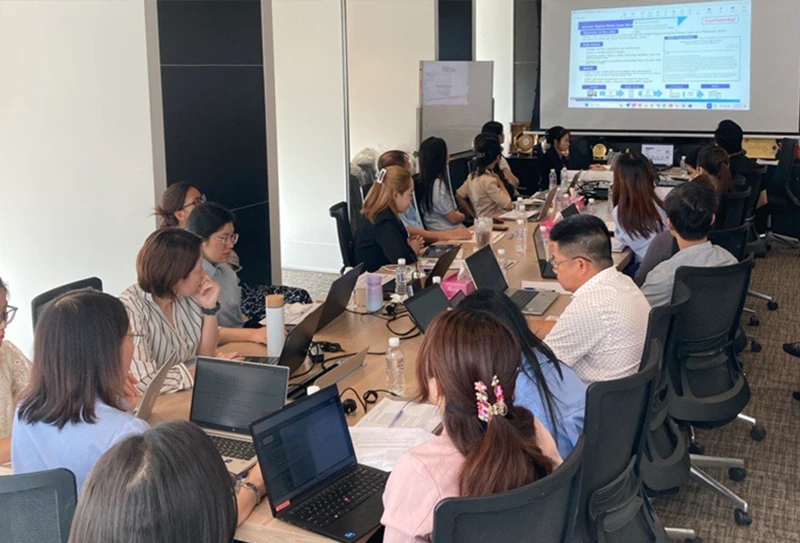
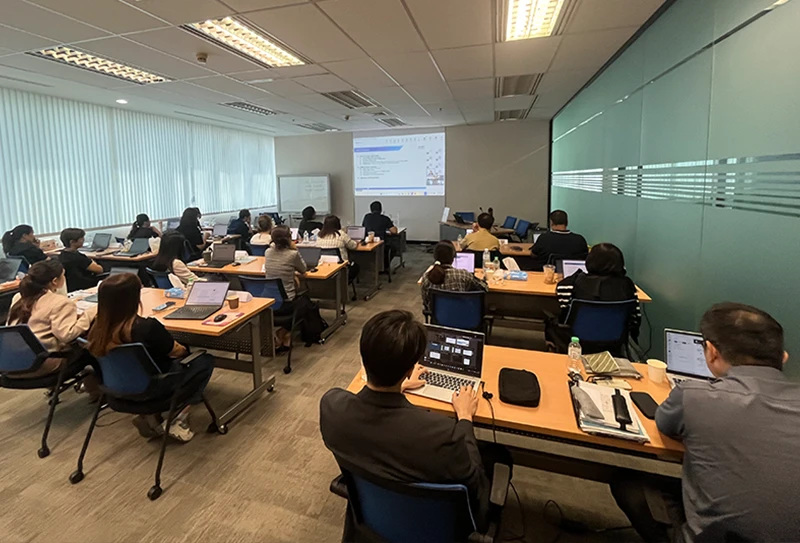
| Online trainings were provided to overseas local subsidiaries and overseas operating companies, mainly in the Middle East & Africa region and Southeast Asia. Training covered recent cases of human rights violations, changes in the external environment surrounding business and human rights, Sojitz Group initiatives, and key points to consider at business sites. | Approx. 180 | |
| For core operating companies in Japan, training on the above topics was conducted either in person or online. | Approx. 120 | |
| Human rights training was added to the pre-departure overseas assignment program (conducted monthly) from October 2025 onward. | Approx. 80 | |
| FY2024 | Sojitz Group conducts internal seminars on the topic of business and human rights. In 2025, we invited Emi Omura, a lawyer specializing in human rights, to hold a seminar for Sojitz COOs titled "Management Challenges and Solutions Regarding Business and Human Rights." Fifteen COOs from Sojitz business divisions and corporate organizations participated in the seminar. To begin the seminar, Sojitz President Kosuke Uemura gave opening remarks on the importance of prioritizing human rights in supply chains. Ms. Omura then gave a lecture covering the following topics:
|
15 COOs |
| FY2023 | An e-learning course on “Managing Human Rights Risks in Supply Chains” was provided to officers and employees of all Sojitz Group companies in Japan and overseas, as well as overseas local subsidiaries and overseas branches. | Approx. 3,600 |
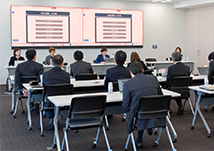
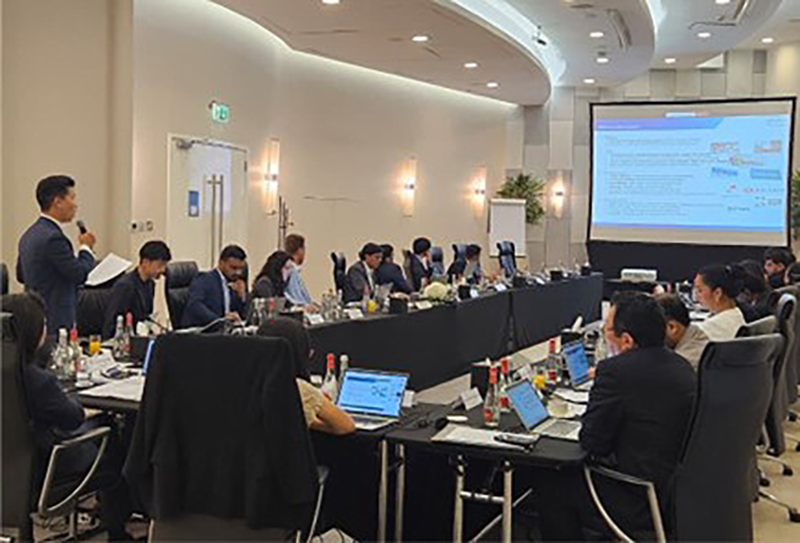
Middle East & Africa Conference (August 2025)
Vietnam Legal Conference (October 2025)
Asia-Oceania Risk Management Conference (November 2025)
Read more
3-1-3. Sojitz Group Sustainable Supply Chain Handbook
-
Provided mainly to suppliers, the Sojitz Group Sustainable Supply Chain Handbook shares Sojitz Group's sustainability-oriented policies and goals, and concrete, real examples of risks in business and how these risks were addressed. The handbook was designed specifically to inform suppliers of the importance of cutting greenhouse gas emissions, conserving biodiversity, and other efforts to lessen the environmental impact of business activities. Additionally, it aims to deepen understanding of human rights risks and efforts to improve working environments, as well as encourage readers to make these efforts themselves.
In addition, this handbook requires suppliers to share with Sojitz their activities to reduce negative environmental and human rights impacts and to reduce negative impacts by conducting on-site visits.
-
Download [4.97 MB]
3-2. Risk Assessments
3-2-1. New Business Investment and Financing
When conducting new investment and financing projects, the department applying for project approval identifies potential environmental and human rights risks, such as forced labor, child labor, and impacts on indigenous peoples, and formulates countermeasures. When necessary, additional investigations are conducted to ensure appropriate identification of risks and response measures.
Approval applications for investment and financing projects must document key issues to be addressed, as well as the corresponding mitigation measures and monitoring methods. Through this approval process, we have established a framework that ensures our decision-making on investment and financing is conducted with due consideration for environmental and human rights impacts.
3-2-2. Existing Businesses and the Supply Chain
Identifying Sojitz Group’s High-Risk Business Areas
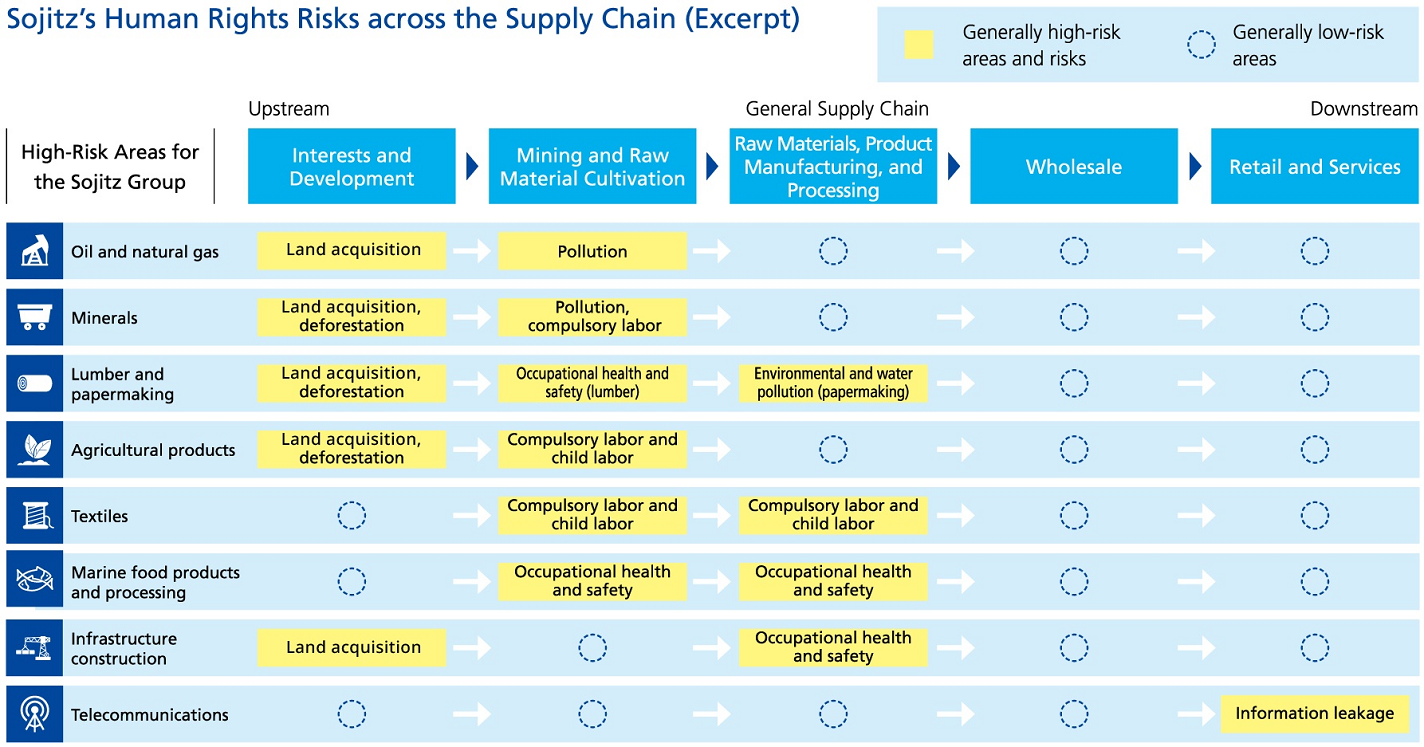
As there are a variety of human rights issues that exist in supply chains, we believe it is important to prioritize our efforts upon conducting an analysis of the business areas that present particularly high human rights risks. From this risk-based approach, Sojitz utilizes a database of human rights risk incident cases maintained by the Business & Human Rights Centre, a UK-based NGO, to identify business areas within our Group that are especially high-risk (“High-Risk Business Areas”). In addition, we analyze and identify the stages of the supply chain where human rights risks are generally more likely to occur.
Based on the results of our analysis, we organize and consolidate a list of key “Environmental and Human Rights Risk Response Points” and share them internally. This approach enables us to accurately identify environmental and human rights risks and translate our findings into a focused and effective response when conducting due diligence for potential investments, new transactions, and existing businesses.
High-Risk Business Areas are regularly reviewed based on the latest database information, the Group's business environment and circumstances, and opinions from external specialists.
Human Rights Risk Identification and Review
To conduct risk assessments effectively, organizations conducting business in High-Risk Business Areas investigate the nature of risks and the status of response measures by conducting questionnaires, interviews, and on-site visits with their business partners.
The results of these assessments are shared through regular dialogues between the Investor Relations & Corporate Sustainability Department and the respective organizations. Issues identified through these dialogues and related response measures are updated on an ongoing basis.
On-site Investigations
Sojitz conducts investigations at the sites of individual transactions and businesses in investigating and confirming human rights risks as required.
Specific Investigation Process
■Wood Procurement (Imports)
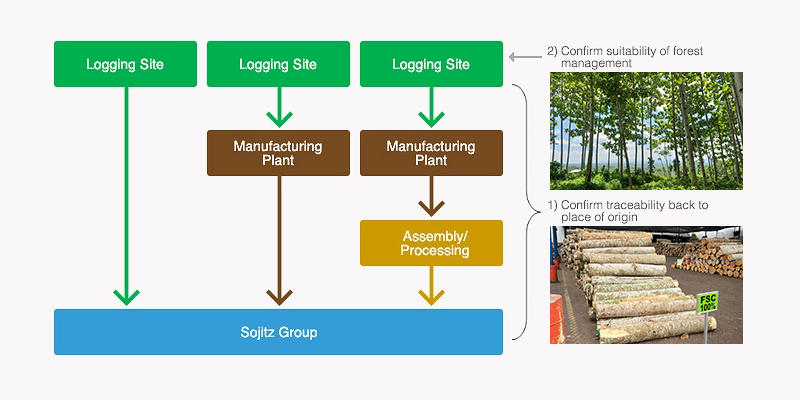
From among Sojitz Group’s approximately 1,500 wood-related suppliers, we identify wood sourced from countries with high country risk, as well as wood procured from suppliers accounting for a large share of the Group’s procurement value. We conduct annual surveys under the supervision of WWF Japan to verify 1) traceability back to the place of origin and 2) suitability of forest management (whether the forest is subject to environmentally/socially-conscious forest management).
As part of the annual surveys, we conduct on-site visits and detailed due diligence involving external specialists for suppliers of concern as necessary. In FY2025, we conducted four on-site investigations (two cases in Indonesia and two cases in Malaysia).
Read more
■Marine Products Procurement (Tuna)
Sojitz established its Marine Products Procurement Policy in December 2024. In FY2025, we conducted a survey of tuna suppliers in accordance with the policy targeting approximately 40 suppliers that together account for the top 80% of the Group’s total procurement value. We plan to conduct on-site due diligence from FY2026 onward based on a risk assessment derived from the survey results.
Key survey items:
- Understanding of Human Rights Policy
- Presence or absence of forced labor and child labor
- Working conditions (working hours, wages, etc.)
- Freedom of association and the rights to collective bargaining
- Prohibition of discrimination and assurance of humane treatment
- Existence of grievance mechanisms
- Status of internal and external audit systems and track records
- Occupational health and safety
- Consideration for the global environment
- Fair trade practices and corruption prevention
- Responsible sourcing
Read more
■Sojitz Group Practices Regarding Foreign Technical Interns
Basic Approach
In Japan, there have been cases in which Foreign Technical Interns face labor and human rights issues, such as low pay, non-payment of wages, lengthy working hours, as well as physical and verbal abuse. The U.S. State Department’s 2023 anti-human trafficking report stated that cases of labor trafficking continue within Japan’s Technical Intern Training Program. As technical interns hail from different nationalities and are linguistically and culturally different to Japanese employees, these workers are often in socially vulnerable positions where they can easily be exploited. Sojitz Group is therefore committed to paying special attention to ensure that technical interns’ rights are protected.
Initiatives: FY2022-FY2024
In order to ascertain the working conditions of Foreign Technical Interns at Sojitz Group, we have conducted fact-finding surveys targeting Group companies that accept Foreign Technical Interns (“Host Companies”). With guidance from third-party consultants, we have verified that there are no violations of relevant laws, regulations, or rules. In addition, organizations from Sojitz Tokyo HQ (the Supply Chain Risk Management Department and Investor Relations & Corporate Sustainability Department) visited Host Companies to inspect workplaces and engage in dialogue with on-site management and Foreign Technical Interns. Through these visits and discussions, we assessed the working and living conditions of technical interns and confirmed that there were no issues present.
Host Companies also promote respect for human rights and implement initiatives aimed at fostering smooth communication with Foreign Technical Interns, such as providing interns with opportunities to study the Japanese language and organizing trips and recreational activities. Furthermore, to deepen understanding of human rights issues related to Foreign Technical Interns and to ensure appropriate acceptance frameworks, we have held lectures by external lawyers for Host Companies, as well as information-sharing meetings among Host Companies.
While Japan’s Technical Intern Training Program is scheduled to transition into the new Training and Employment Program, Sojitz Group will continue its efforts to raise awareness of respect for the human rights of foreign workers and maintain appropriate trainee acceptance frameworks across the Group.
3-3. Improvements and Remedial Measures
In the event that an issue is identified through a risk assessment, consultation, or report from an internal or external source, we work to verify the facts and collaborate with relevant stakeholders and business partners to implement corrective measures.
Grievance Mechanisms
Sojitz Group has established a system to directly receive information and communications relating to human rights from relevant parties necessary for the improvement and remedy in order to facilitate direct engagement with stakeholders.
■ Contact Information for External Stakeholders (Japanese and English available)
We have established a hotline to receive complaints and inquiries related to human rights from all stakeholders, including those within the supply chain.
After receiving a report, we will confirm and respond through the process outlined below.
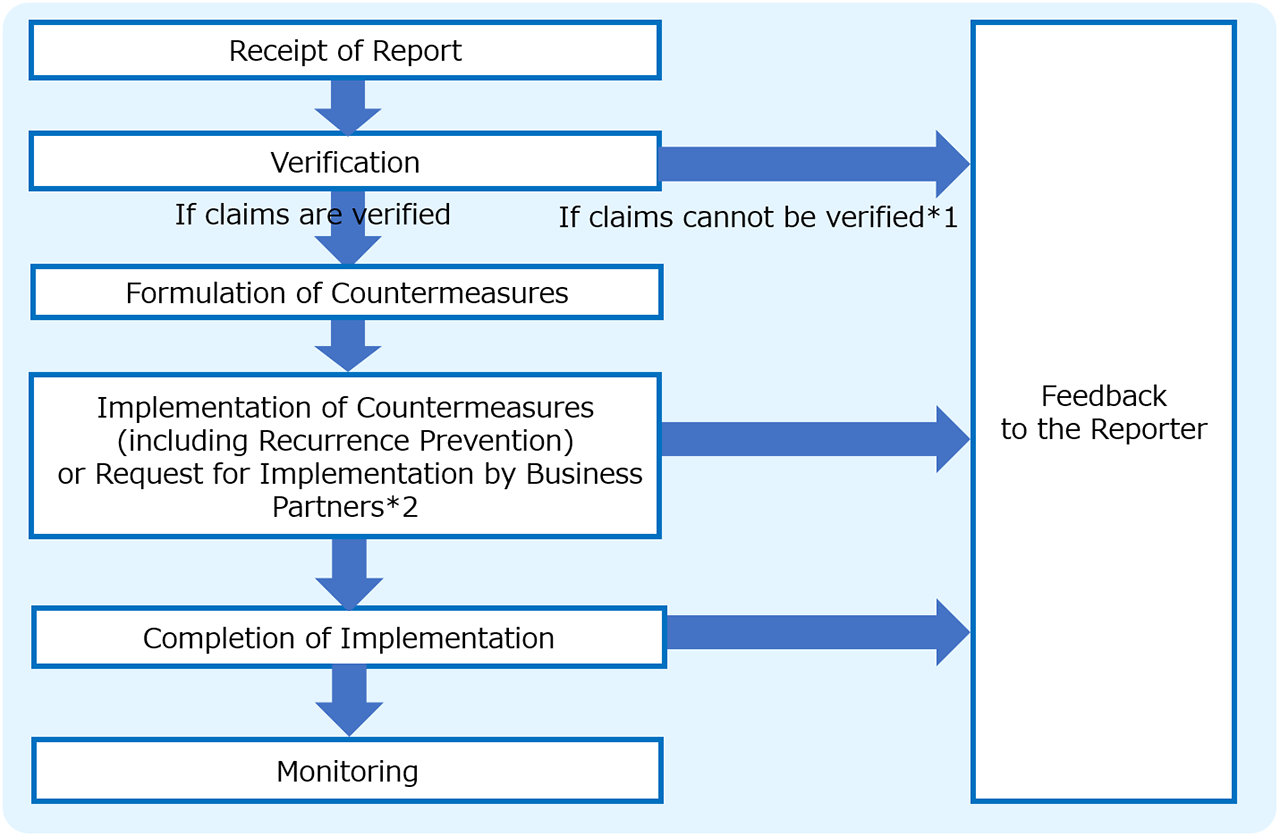
- If claims cannot be verified, we will provide feedback to the reporter and continue the investigation as necessary.
- If no improvement has been made after a specified period by business partners, we will take measures which may include a reconsideration of the contract with the supplier or partner.
■ Compliance Hotlines
Sojitz operates multiple hotlines for reporting compliance issues. The company has also established an internal reporting system that allows employees to raise compliance-related questions and concerns and report any Sojitz Corporation or Sojitz Group employee who has committed or is suspected of committing a compliance violation. Sojitz has established multiple compliance hotlines for use by any Sojitz Group member or external party. The hotlines can be used for any compliance-related questions or concerns, and employees can report incidents as part of the internal reporting system through the following hotlines.
Read more
We manage personal information provided to our hotlines in accordance with our Privacy Policy to guarantee confidentiality.
3-4. Other Initiatives
Participation in EcoVadis
EcoVadis is a globally recognized platform that evaluates corporate sustainability performance based on environmental, social, and other ESG perspectives.
In line with our long-term sustainability vision, Sustainability Challenge, the Chemicals Division and certain Group companies undergo EcoVadis assessments with the objective of promoting responsible business practices and strengthening our supply chains. We utilize the assessment results to continuously advance sustainable business practices across our operations.
4. Performance
4-1. Spreading Awareness of Sojitz’s Human Rights Policy
We conduct dialogues and training sessions with members of Group management to share the Sojitz Group Human Rights Policy throughout the Group and ensure thorough understanding and implementation of the policy at our business sites. Please refer to the following sections for details on our implementation and training initiatives.
4-2. Wood Procurement: Results of 2025 Survey
For wood procured (imported) from overseas, Sojitz Group evaluates procurement by classifying wood into the following four levels based on 1) traceability back to the place of origin and 2) suitability of forest management (whether the forest is subject to environmentally/socially-conscious forest management). We set targets for wood procurement using procurement ratios as key indicators.
- Level A:Wood confirmed to be certified wood (*)
- Level B:Wood which has not been certified, but for which we have verified both traceability and suitability of forest management (i.e., that the forest is subject to environmentally/socially conscious forest management)
- Level C:Traceable wood
- Level D:Wood lacking traceability
*:Wood certified under FSC®, PEFC, etc.
| FY2025 |
|
|---|---|
| FY2026 |
|
Read more