Sojitz’s Offshore Wind Power Business in Taiwan:
Developing and Operating One of the Country’s Largest Wind Farms
Nov. 28, 2025
Nov. 28, 2025
Offshore wind power has great potential as a large-scale renewable power source. In 2019, Sojitz joined the Yunlin Offshore Wind Farm (OWF) project, which was then one of the largest initiatives of its kind in the Asia-Pacific region outside of China. Located in the Taiwan Strait, Yunlin OWF has a capacity of 640 MW and generates enough energy to power over 600,000 Taiwanese homes annually. The facility launched commercial operations on January 30, 2025, and delivers a stable supply of renewable energy while reducing CO2 emissions by roughly 1.2 million tons per year. This feature provides an in-depth look at Sojitz’s offshore wind farm business in Yunlin County, Taiwan.
- Sojitz is involved the development and operation of the Yunlin Offshore Wind Farm, a 640-MW facility among the largest in Taiwan
- Despite encountering challenges that far exceeded initial expectations, Sojitz advanced the project while fulfilling its social responsibility and duty to project stakeholders
- Sojitz assesses risk and adapts its approach to each new offshore wind power project in order account for the unique characteristics of each country and region, working to create business plans deeply rooted in local communities
Offshore wind power holds great potential among renewable energy sources based on the large-scale generation capacity and reliability of power produced by wind turbines. European countries first began trials for adopting wind power solutions in the early 2000s, which initiated the rapid spread of offshore wind technology across the globe. Since 2008, the world’s cumulative installed capacity of offshore wind power has increased at a rate of roughly 9.0 GW per year, growing from 1.2 GW in 2008 to 83.2 GW in 2024.*1 At the same time, challenges with offshore wind power have also emerged, including supply chain constraints encountered when attempting to upscale, the high technical difficulty of wind farm construction, and skyrocketing construction costs brought on by drastic fluctuations in the global economy in recent years.
*1 Source: Global Offshore Wind Report 2025 (Global Wind Energy Council)
In Asia, Taiwan was the first country to set targets for the introduction of offshore wind power. With limited domestic energy resources, Taiwan relies on imports for the majority of its primary energy sources, including petroleum, natural gas, and coal. As Taiwan works to transition away from nuclear power, the country has positioned offshore wind as a key pillar of its strategy for ensuring a stable energy supply going forward. However, Taiwan differs in several key ways from its European counterparts also advancing wind power initiatives. Typhoon season and other severe weather conditions limit the timeframes during which offshore construction is possible, and the lack of available marine and environmental data complicates processes such as laying underwater foundations for turbines. These unique characteristics of the region introduce limitations and call for a range of adaptive solutions.
After entering the onshore wind power business in Ireland in 2017, Sojitz began searching for opportunities to expand its business into the offshore wind power field. The company set its sights on Taiwan, a country that was emerging as the next major wind power market after Europe due to the nation’s proactive establishment of wind energy adoption targets as well as relevant laws and regulations. As part of research into the local market, Sojitz initiated contact with then wpd AG (currently Skyborn Renewables), a German renewable energy developer that had already begun developing an offshore wind farm in Taiwan after securing access to the country’s power grid and permits to enter into PPAs with state-owned Taiwan Power Company.
Sojitz teams made numerous visits to wpd’s headquarters in Germany and fostered a strong partnership built on communication and mutual trust. In addition, Sojitz had also conducted proactive marketing and research in Taiwan, which allowed the company to propose a bid price that demonstrated a deep understanding of the local energy industry. All of these efforts garnered high praise and earned the trust of wpd, and the two companies ultimately formed an agreement for Sojitz’s participation in the development and operation of wpd’s existing wind farm project in Taiwan.
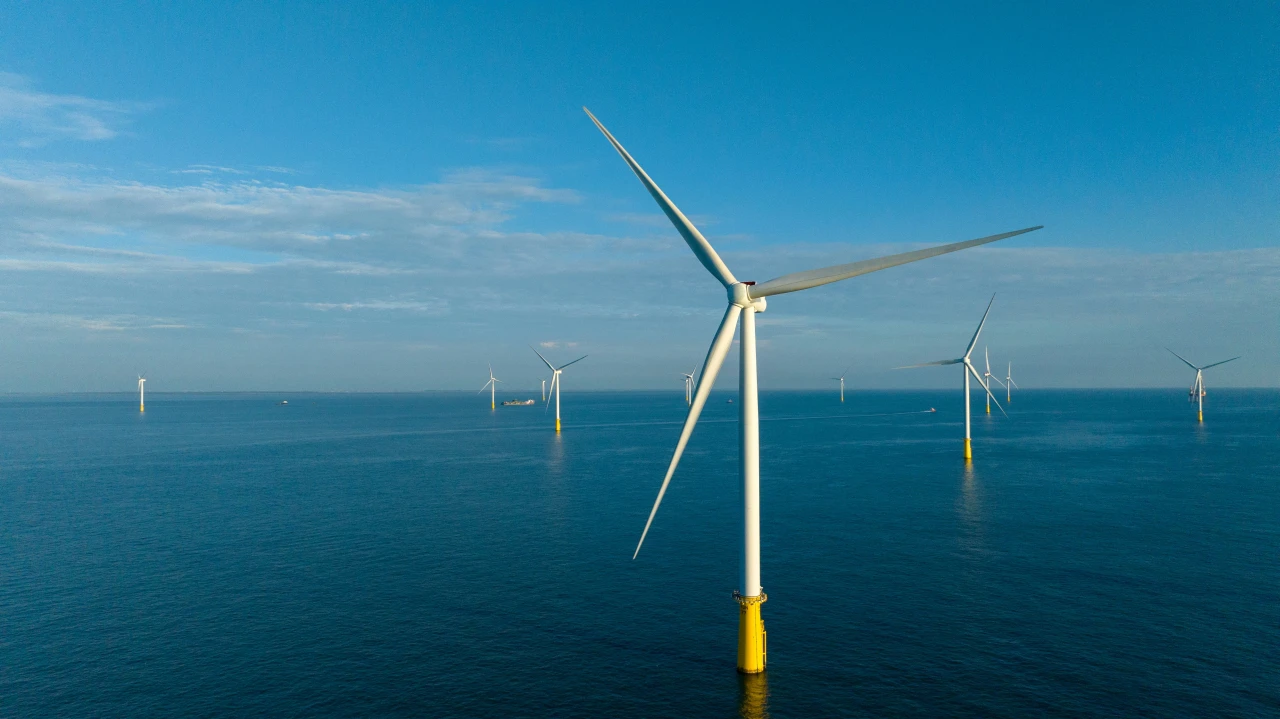
The completed Yunlin Offshore Wind Farm
(Source: Yunlin OWF)
The Yunlin OWF is located in the Taiwan Strait and consists of 80 wind turbine generators, each with an 8-MW capacity. With a total capacity of 640 MW, the wind farm is among the largest in Taiwan and delivers a stable supply of renewable energy while reducing CO2 emissions by roughly 1.2 million tons per year. All electricity generated by Yunlin OWF is contracted for a fixed price by Taiwan Power Company under a 20-year power purchase agreement and will be supplied via Taiwan’s power grid. After the contract’s expiration, the facility’s full output is set to be sold on the electricity spot market.
In the development of an offshore wind farm, chartering a construction vessel is one of the most consequential factors that impacts key tasks such as building structural foundations and mounting the large-scale wind turbines.
However, the ship originally arranged for use on the Yunlin project was damaged during work on another project and rendered unusable. The construction project went on to encounter a series of additional setbacks, including the spread of COVID-19 among its workforce and replacement of the construction company initially contracted to handle the project. Shelter-in-place orders and other restrictions brought on by the pandemic in 2020 further obstructed building progress.
Amidst these obstacles, Sojitz began searching for a new construction vessel in order to keep the project moving forward. The company ultimately chartered Blue Wind, one of the world’s largest self-elevating platform (SEP) vessels, which belonged to Shimizu Corporation. Sojitz had previously formed a relationship with Shimizu during a past project in Europe.
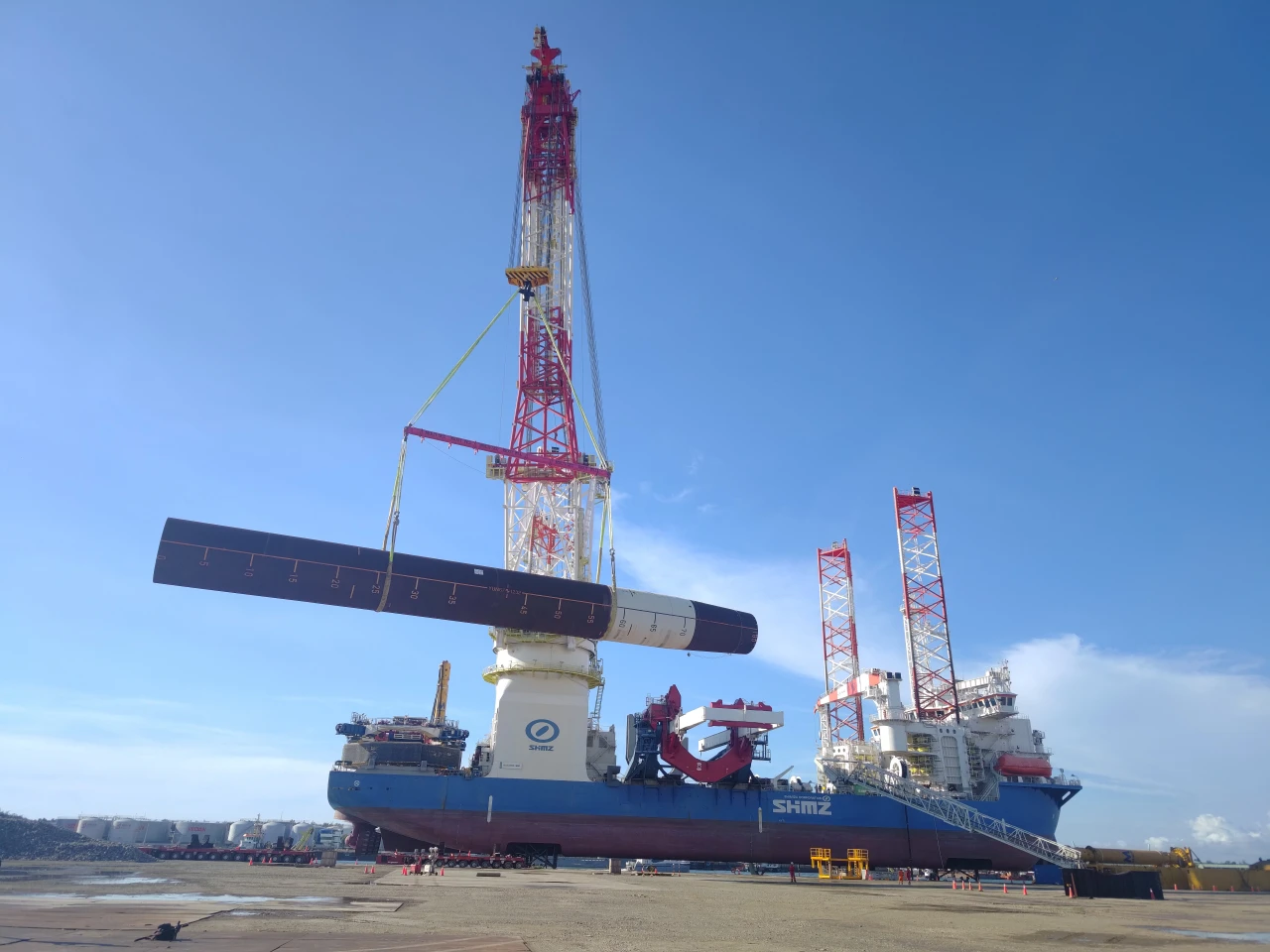
The underwater foundation of a wind turbine is loaded onto Blue Wind
(Source: Yunlin OWF)
Typically, a different type of work ship is required for each phase of the offshore wind farm construction process, from installing the foundation to mounting the wind turbines. In contrast, Shimizu’s Blue Wind is equipped to handle all of these tasks. The ship’s world-class loading capacity allows it to transport massive amounts of building materials in a single trip, which significantly shortens the overall construction timeline. Blue Wind’s crane also ranks among the most powerful in the world, with a maximum lifting capacity of 2,500 tons and maximum lifting height of 158 meters.
The Yunlin project also partnered with companies experienced in all aspects of vessel operation planning, including SEP-based construction, the ship loading process, and vessel jack-up. Use of the SEP allowed for comprehensive engineering and the development of a logical, streamlined project plan. In addition, Blue Wind is a self-propelled SEP ship, which eliminates the need for a towing vessel and further expedites the construction process. The project achieved major strides thanks to the use of Blue Wind, and commercial operations at the offshore wind farm officially began in January 2025.
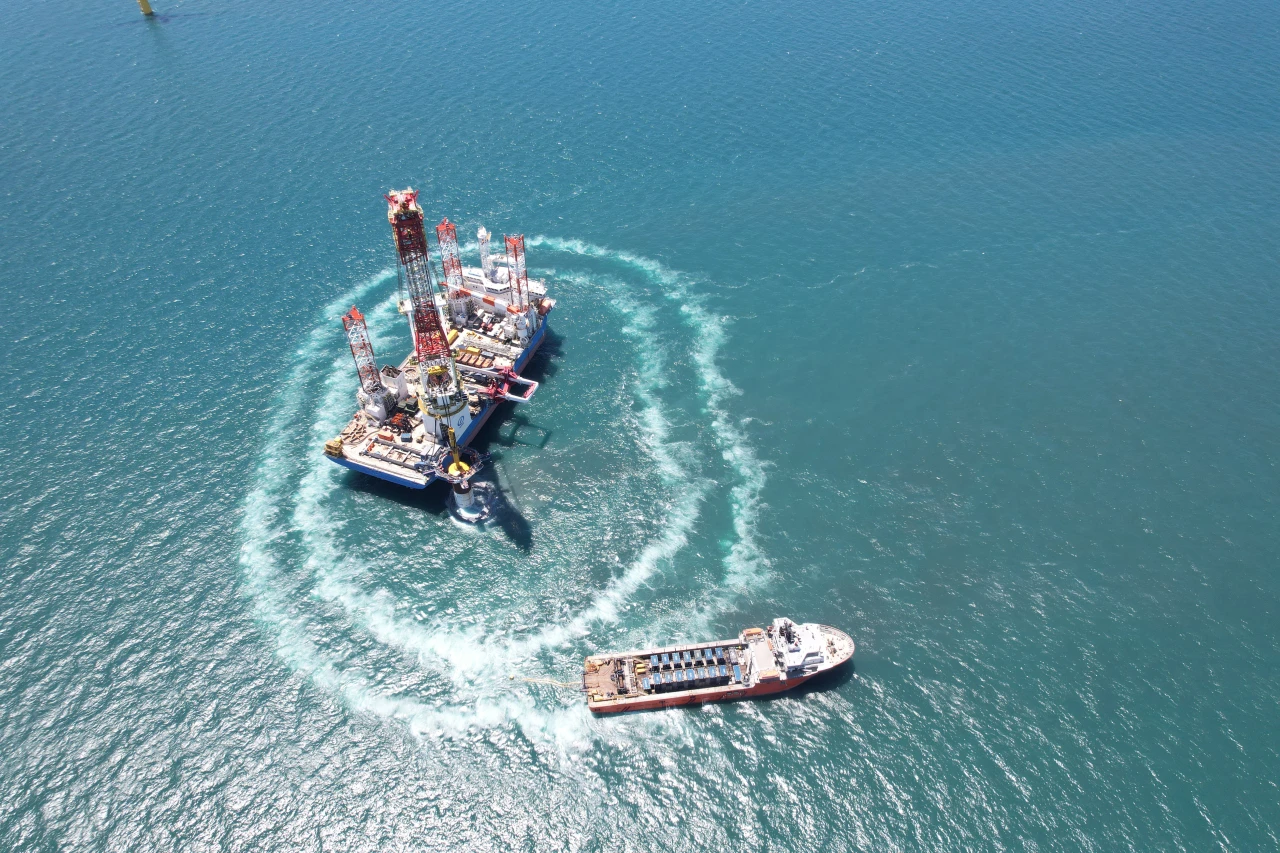
Blue Wind mounts a wind turbine onto its underwater foundation
(Source: Yunlin OWF)
Sojitz’s strong drive to overcome each obstacle and advance the project forward was rooted in a recognition of the significant social responsibility associated with the offshore wind power business in Taiwan. Sojitz’s relationship with Taiwan spans nearly 130 years, including the business activities of its predecessor Nissho Iwai Corporation and even earlier predecessor company, Suzuki & Co. Honoring the trust of the Taiwanese government was a core mission for Sojitz.
Sojitz also understood the wide-ranging impact that the Yunlin project would have on the region and local stakeholders as the country’s first offshore windfarm, and Sojitz teams kept this fact in mind as they worked tirelessly to address each challenge the project faced while advancing forward one step at a time.
Sojitz approached the Yunlin project with a strong sense of responsibility to see construction through to completion. Even as challenges emerged, the company worked closely with its partners and engaged in open and honest discussion to solve each problem that arose, and Sojitz aims to leverage this experience in its future business endeavors.
The construction process at Yunlin was impacted by a number of unpredictable external factors, but after roughly five years, the work was completed and the Yunlin OWF officially launched commercial operations. Throughout the process, Sojitz gained many valuable lessons about the offshore wind power business.
In Europe and the U.S., laws and regulatory systems for marine spatial planning have been put in place, and specific coastal regions have been designated as most suitable for offshore wind power generation. As a result, there is a wealth of existing marine and environmental data and well-defined rules regarding development. On the other hand, the Asia region, including Taiwan and Japan, has yet to establish a centralized system for managing marine development. It is therefore essential that developers carefully assess factors such as seafloor topography, the natural environment, and other variables that pose risks to the construction process. Sojitz recognizes the importance of engaging in dialogue with stakeholders, including local governments and fishery cooperatives, to create a business plan that is deeply rooted in the local community. Even within the offshore wind power field, the company’s approach must be adapted to fit the unique needs and characteristics of each location.
Sojitz aims to leverage the knowledge and experience gained through this project in its efforts to develop new offshore wind power initiatives primarily in Europe and the Asia region going forward.